twinos family

Named by function. Built for repeatability.

Receive. Transform. Distribute. Store. Move. Condition. Coordinate.

Every offer starts with twinos and a functional verb. Each function carries a known asset boundary, known interface logic, a defined acceptance envelope, and a known path into digital coordination.

01 · twinos Receive

Receives utility or plant power.

Incoming receiving station, E-House, modular electrical intake.
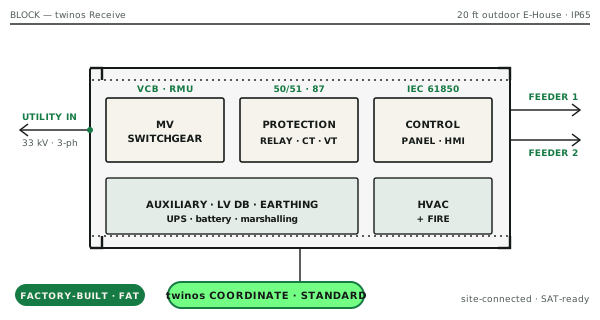
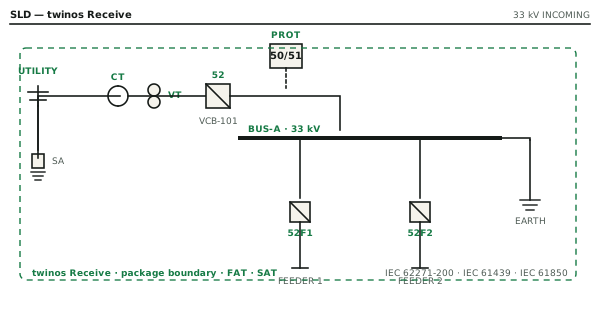
Block diagram view: Single-line diagram: incoming utility → CT/VT metering → main circuit breaker (52) → outgoing bus Single-line diagram: incoming utility → CT/VT metering → main circuit breaker (52) → outgoing bus
Indicative block diagram. Configuration and ratings tuned per project.

Known incoming interface, factory-assembled E-House, FAT-tested protection logic, and a single hand-over interface to the rest of the plant.

  • Use when

    Power intake must be repeatable, tested, and ready for site energization.

  • Known boundary

    Incoming supply, metering, protection, layout, earthing, and handover interface.

  • Operating value

    Clearer energization, easier inspection, visible intake status.

Typical contents

  • MV circuit breaker (VCB) or ring main unit
  • Metering CTs / VTs
  • Numerical protection relay
  • Surge arrestors & earthing system
  • LV auxiliary supply & control panel

Rated envelope

Voltage
up to 33 kV
Rated current
630 – 2500 A
Short-circuit
25 – 50 kA / 1 s
Enclosure
IP54 / IP65 outdoor
Ambient
-10 to +45 °C

Standards

  • IEC 62271-200
  • IEC 61439-1/-2
  • IEC 61850
  • IS / IEC 60076
02 · twinos Transform

Transforms power between voltage levels.

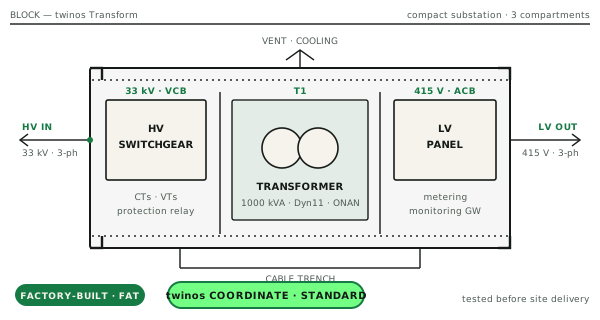
Compact secondary substation, transformer package, MV / LV transformation system.
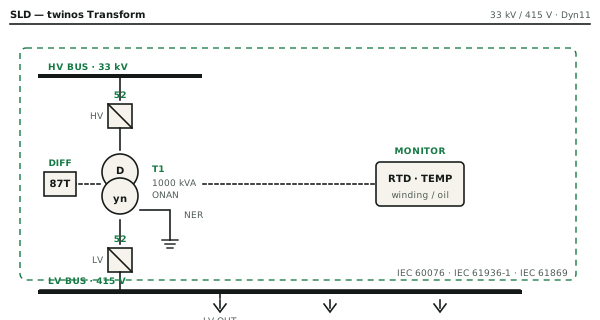
Block diagram view: Single-line diagram: HV bus → breaker (52) → transformer (Dyn11) → LV bus with outgoing feeders Single-line diagram: HV bus → breaker (52) → transformer (Dyn11) → LV bus with outgoing feeders
Indicative block diagram. Configuration and ratings tuned per project.

Known transformation boundary, repeatable transformer + protection arrangement, factory-assembled, reduced site coordination.

  • Use when

    Voltage conversion has to be compact, repeatable, and easier to commission.

  • Known boundary

    Transformer, protection, MV/LV interface, ventilation, service access.

  • Operating value

    Predictable conversion behavior and clearer maintenance context.

Typical contents

  • Distribution / dry-type / oil-cooled transformer
  • HV cable termination & MV switchgear
  • LV bus duct or cables, ACB / MCCB
  • Transformer protection (87T, 50/51, NER)
  • Cooling, RTDs, auxiliary supply

Rated envelope

Primary
11 / 22 / 33 kV
Secondary
415 V / 6.6 kV
Rating
100 kVA – 2.5 MVA
Vector group
Dyn11 typ.
Cooling
ONAN / AN

Standards

  • IEC 60076-1 to -11
  • IEC 61936-1
  • IEC 60044 / 61869
  • IS 2026 / IS 1180
03 · twinos Distribute

Distributes power across loads.

PCC, MCC, distribution boards, modular panel systems.
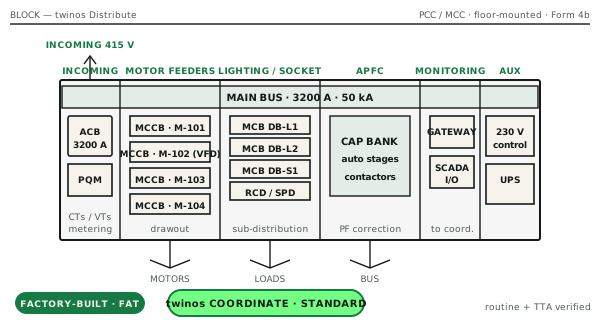
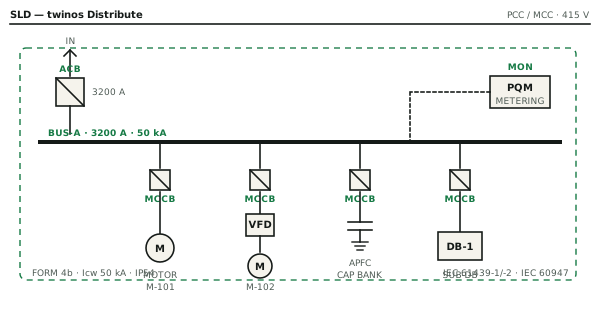
Block diagram view: Single-line diagram: incoming ACB → main bus → feeders with MCCBs to motor and static loads Single-line diagram: incoming ACB → main bus → feeders with MCCBs to motor and static loads
Indicative block diagram. Configuration and ratings tuned per project.

Known feeder architecture, structured expansion, traceable maintenance, and a panel boundary the operator can read.

  • Use when

    Plant, utility, or auxiliary loads need structured routing and expansion.

  • Known boundary

    Feeders, breakers, panels, metering, cable routes, expansion space.

  • Operating value

    Faster fault isolation, clearer load visibility, easier change control.

Typical contents

  • Power control centre (PCC) / motor control centre (MCC)
  • ACB / MCCB / MPCB feeders
  • Busbar trunking, sub-distribution boards
  • Capacitor bank / APFC, surge protection
  • Metering & monitoring gateway

Rated envelope

Voltage
415 V / 690 V
Bus current
630 – 6300 A
Short-circuit Icw
50 – 100 kA / 1 s
Form
Form 3b / Form 4b
Enclosure
IP42 / IP54

Standards

  • IEC 61439-1 / -2
  • IEC 60947
  • IS 8623
  • TTA test reports
04 · twinos Store

Stores energy for industrial operation.

Modular energy storage (BESS) and energy buffering system.
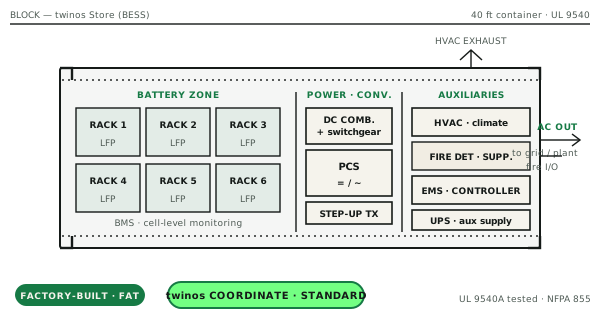
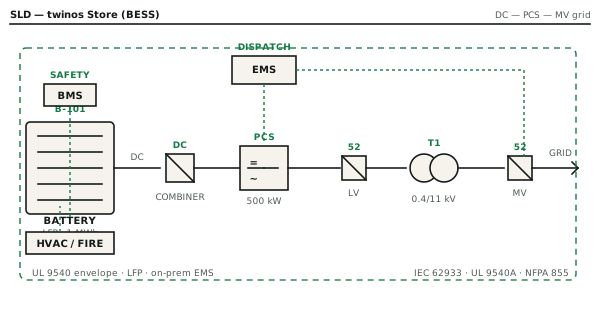
Block diagram view: Single-line diagram: battery rack → DC combiner → PCS inverter → MV step-up → grid interface, with EMS link Single-line diagram: battery rack → DC combiner → PCS inverter → MV step-up → grid interface, with EMS link
Indicative block diagram. Configuration and ratings tuned per project.

Known storage boundary, EMS-ready dispatch, thermal and safety envelope, and visible operating behavior.

  • Use when

    Loads need buffering, backup, peak response, renewable smoothing, or dispatch.

  • Known boundary

    Battery enclosure, thermal envelope, safety systems, EMS link, grid interface.

  • Operating value

    Visible state, dispatch, alarms, energy flow, and lifecycle behavior.

Typical contents

  • Li-ion battery modules (LFP) & BMS
  • DC combiner & PCS inverter
  • Energy management system (EMS)
  • HVAC, fire detection & suppression
  • Step-up transformer & grid interface

Rated envelope

System size
100 kWh – 5 MWh
PCS rating
50 kW – 2 MW
C-rate
0.25 – 1 C
Round-trip eff.
≥ 88 %
Ambient
-20 to +50 °C

Standards

  • IEC 62933
  • UL 9540 / 9540A
  • IEC 62619
  • NFPA 855
05 · twinos Move

Moves fluids through known systems.

Pump skids, instrument skids, fluid transfer & process utility skids.
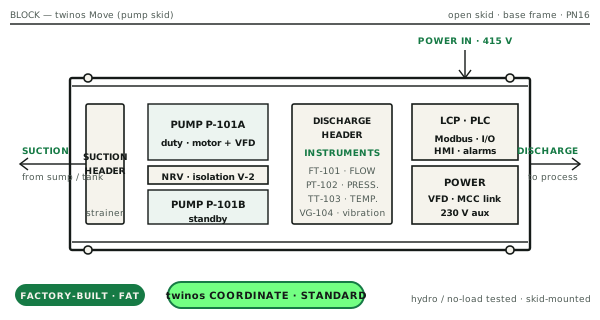
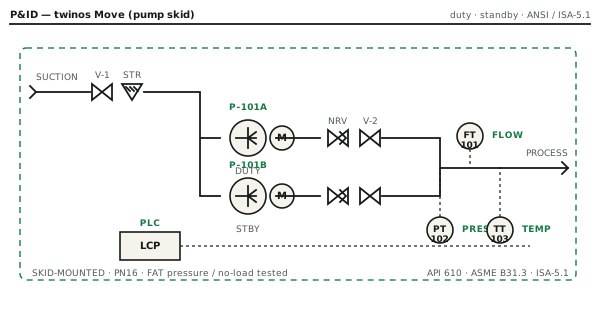
Block diagram view: P&ID: suction header → isolation valve, strainer → duty/standby pumps → check valve, isolation → discharge with FT, PT, TT instruments P&ID: suction header → isolation valve, strainer → duty/standby pumps → check valve, isolation → discharge with FT, PT, TT instruments
Indicative block diagram. Configuration and ratings tuned per project.

Known pumping envelope, factory-tested instrument boundary, and a single utility interface to the plant.

  • Use when

    Fluid movement needs a tested package instead of site-built uncertainty.

  • Known boundary

    Pumps, valves, instruments, piping connections, controls, utility interface.

  • Operating value

    Clearer alarms, run hours, service history, utility behavior.

Typical contents

  • Duty / standby pumps with motor + VFD
  • Suction & discharge isolation, NRV, strainer
  • Flow, pressure, temperature instrumentation
  • Local control panel (LCP) with PLC
  • Skid base, piping, junction boxes

Rated envelope

Flow
5 – 500 m³/h
Head
10 – 100 m
Motor
5 – 250 kW
Design pressure
PN16 / PN25
Ambient
-10 to +50 °C

Standards

  • API 610 / ISO 13709
  • ASME B31.3
  • ISA-5.1
  • IEC 60529 (IP)
06 · twinos Condition

Conditions operating environments.

HVAC skids, chiller skids, fire & utility conditioning systems.
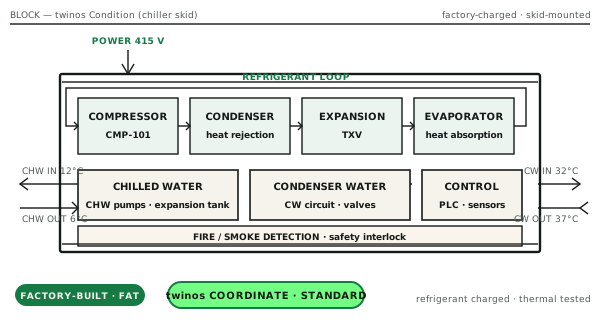
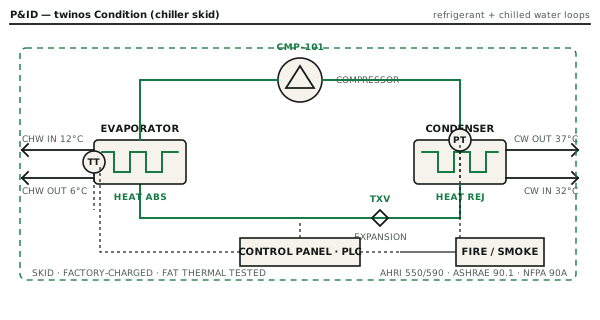
Block diagram view: P&ID: refrigerant loop compressor → condenser → expansion → evaporator, with chilled water in/out and instrument bubbles P&ID: refrigerant loop compressor → condenser → expansion → evaporator, with chilled water in/out and instrument bubbles
Indicative block diagram. Configuration and ratings tuned per project.

Known thermal envelope, factory-built skid, defined safety interface, and serviceable lifecycle.

  • Use when

    Cooling, HVAC, fire, or utility conditioning has to be packaged and serviceable.

  • Known boundary

    Thermal load, equipment interface, safety link, controls, service access.

  • Operating value

    Better environmental visibility, alarm context, maintenance planning.

Typical contents

  • Compressor(s), condenser, evaporator
  • Refrigerant circuit & expansion device
  • Chilled water pumps, expansion tank
  • Control panel with PLC & sensors
  • Fire / smoke detection interface

Rated envelope

Cooling capacity
50 – 1500 TR
CHW supply
6 – 12 °C
Condenser water
32 – 37 °C
COP
4 – 6.5
Sound
≤ 75 dB(A) @ 1 m

Standards

  • AHRI 550 / 590
  • ASHRAE 90.1
  • NFPA 90A
  • IS 8148
07 · twinos Coordinate

Coordinates modular and brownfield infrastructure.

Monitoring, analytics, reporting, and retrofit visibility.
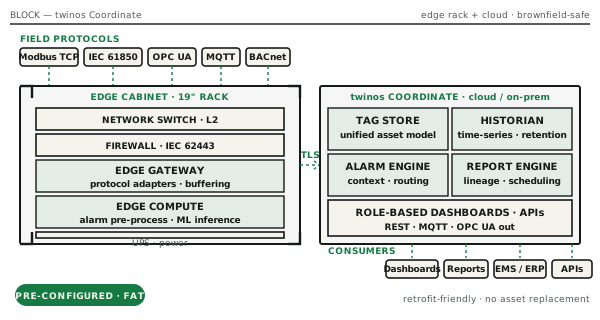
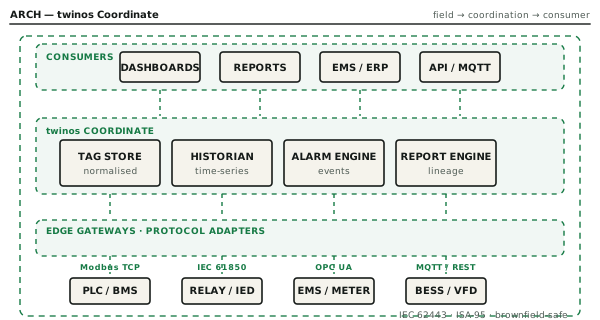
Block diagram view: System architecture: field devices (relay, BMS, EMS, PLC) connect to twinos via Modbus TCP, IEC 61850, OPC UA, MQTT; coordination layer feeds dashboards and reports System architecture: field devices (relay, BMS, EMS, PLC) connect to twinos via Modbus TCP, IEC 61850, OPC UA, MQTT; coordination layer feeds dashboards and reports
Indicative block diagram. Protocols and assets tuned per estate.

Connects heterogeneous assets, normalises operational data, and supports lifecycle traceability without forced replacement.

  • Use when

    Mixed assets, vendors, and protocols need one visible operating layer.

  • Known boundary

    Device data, tags, events, reports, dashboards, lifecycle records.

  • Operating value

    Retrofit visibility, alarm context, report lineage, coordinated decisions.

Typical contents

  • Edge gateways & protocol adapters
  • Normalised tag store & time-series database
  • Alarm engine & event log
  • Role-based dashboards & report engine
  • REST / MQTT APIs for upstream systems

Rated envelope

Tag scale
up to 100 k tags
Alarm latency
< 1 s typ.
Availability
99.9 % target
Deployment
on-prem / private cloud / hybrid
Historian
multi-year retention

Standards / protocols

  • OPC UA
  • IEC 61850
  • Modbus TCP
  • MQTT
  • IEC 62443 / ISA-95

Seven functions. One coordination layer.

Specify a function, deploy a known package, and operate it through twinos Coordinate.

Start a discussion